



Pearl jewelry spans an enormous range in price. Two necklaces can look nearly identical to an untrained eye — yet one costs a few hundred dollars and the other several thousand, and the difference between them is real, even when the explanation is not immediately obvious.
Price Is Often Driven by Branding, Not the Pearl
In many cases, you are paying for brand positioning and name, its history and perceived heritage, the luxury segment the brand occupies, and significant retail markup — not only for the pearl itself. A well-known name can multiply the price of a piece without changing the underlying quality in the same proportion, or sometimes at all.
To understand what the price should actually reflect, here’s how saltwater pearl pricing works from farm to market.
Uniformity Matters — But It’s Not the Whole Story
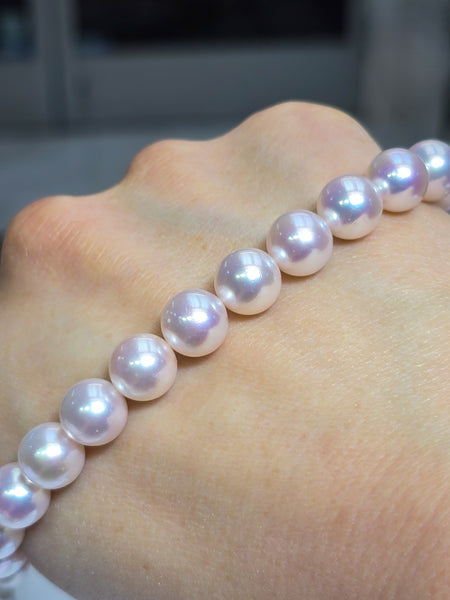
Perfectly matched strands are genuinely valuable. No two pearls are identical, so assembling a necklace where pearls match in size, color, shape, and luster requires expertise, access, volume, and careful selection. That alone can significantly increase the price.
However, matching is only one component of value. A perfectly matched strand of average pearls is still made of average pearls, and a less uniform strand of rare pearls can be far more valuable.
What Actually Drives Value
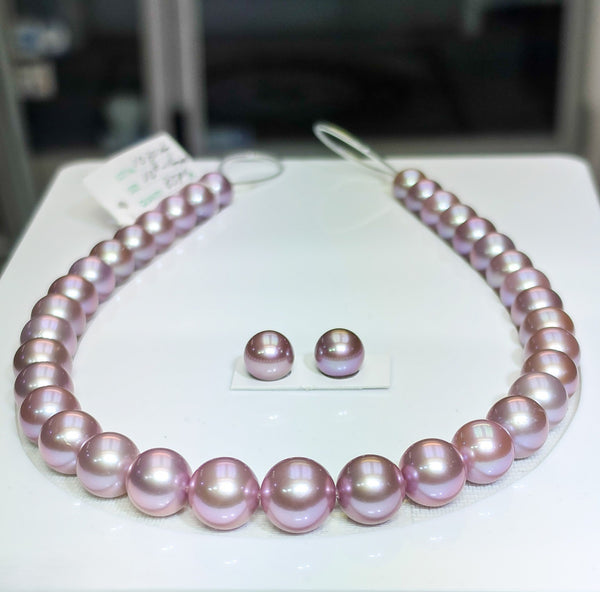
Value in pearls begins with rarity of the pearl type itself. Some pearl types are inherently scarce, regardless of how “perfect” they look. A Sea of Cortez pearl — even with visible irregularities — can cost significantly more than a near-perfect Tahitian pearl, simply because far fewer exist.
After rarity, value is determined by:
- Luster — how strongly and sharply the pearl reflects light
- Surface quality — how free of visible inclusions it is
- Shape — how symmetrical it is (round, drop, or baroque)
- Size — how rare that size is for that pearl type
- Color — how rare and naturally occurring that color is within that pearl type
- Nacre quality — thickness and structure, which affect durability and appearance
- Matching — how well pearls are matched across a piece
These factors together determine whether a pearl is common, good, or exceptional. For a full breakdown of how each factor works, here’s what makes one pearl more valuable than another.
Where the Price Doesn’t Match Quality
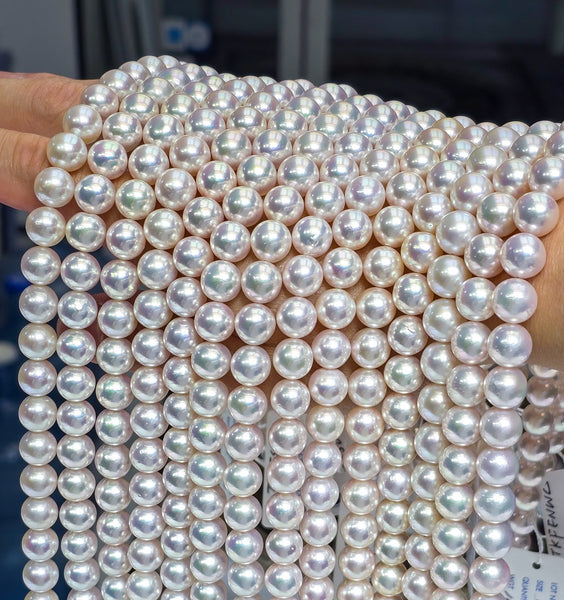
Most buyers are guided toward what is easy to recognize: brand. Because it is familiar — and recognition is often treated as a guarantee of quality. Brand alone is not a reliable indicator of pearl value, and without understanding rarity, luster, and matching, prices can seem inconsistent when in fact they follow a clear logic — just not the one being advertised.
For a broader look at how the market has shifted, here’s why buying pearls has become more complicated.
How to Approach Buying Differently
Before you look at the price tag, ask:
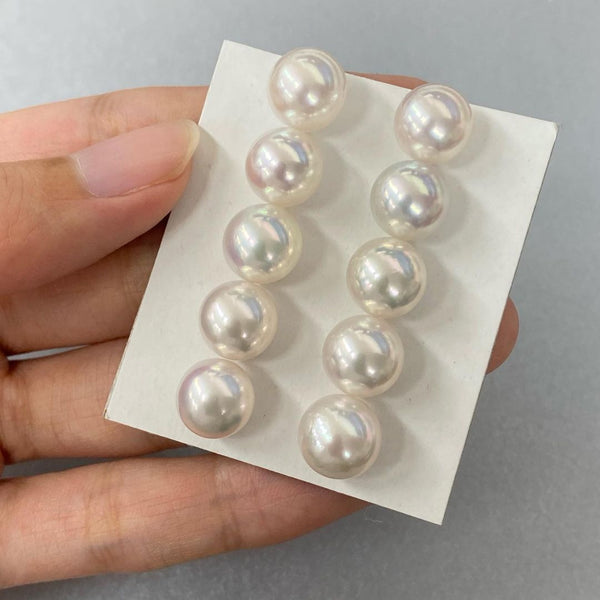
- How strong is the luster — does the reflection look sharp or diffuse?
- How clean is the surface under good light?
- How rare is this pearl type, independent of how it looks?
- Can the seller explain why this piece is priced the way it is?
Vague answers usually mean a vague price. Once you know what to look for, the price either holds up under scrutiny — or it reveals itself.
If you want to avoid these pricing traps entirely, here’s how to avoid the most common mistakes when buying pearls. And if you want a step-by-step framework for choosing confidently, here’s how to choose a pearl you won’t regret buying.