


Buying pearls is not a standardized transaction — there is no universal grading system, no certification that tells the full story, and no shortcut that replaces knowing what you’re looking at or knowing the person selling to you. The pearl market is more complex than it appears: different origins, different treatments, wildly different quality at similar price points. What you’re actually buying depends less on luck and more on who is guiding you.
Why expertise matters more than ever
A knowledgeable specialist helps you understand what you’re actually seeing: luster, surface quality, shape, nacre thickness, origin. More importantly, they help you prioritize what matters for you — not just what looks impressive on paper. Without that guidance, it’s easy to overpay, or to misunderstand what you’re buying entirely. For a clear breakdown of what quality factors actually mean, here’s how pearl value is actually determined. And for context on why the market has become harder to navigate, here’s why buying pearls has become more complicated.
Transparency is the baseline
A trustworthy seller tells you the type of pearl, the origin, whether it’s been treated, and how the price was arrived at — as a matter of course, not as a favor. The more a seller explains without being asked, the more confident your decision can be. If you want to understand what treatments look like in practice, here’s what dyed pearls are and what you should always be told.
Certificates help. Integrity matters more.
Documentation can be useful, but in pearls it is not the full story. For a detailed look at which certificates actually carry weight — and which don’t — here’s a full guide to pearl certification. What matters more is honest representation: accurate photographs, realistic descriptions, and consistency between what you see and what arrives. A reputable seller stands behind their pearls — and paperwork alone is not what makes that true.
Sourcing is a quality question, not just an ethics one
Pearl farming, done responsibly, is one of the most sustainable forms of jewelry production. But sourcing varies. A seller who understands where their pearls come from — and works with producers they know — is also a seller who understands quality. The two are connected.

What to look for
Look past the marketing. A seller worth trusting typically shows: real, consistent customer feedback; educational content that goes beyond product listings; direct communication; and a point of view that isn’t interchangeable with every other pearl website. Grading language is one place where this becomes obvious fast — here’s why “AAA” doesn’t tell you what most people think it does.
After the sale
A seller who intends to be around doesn’t disappear after purchase. Care guidance, restringing advice, a clear return policy, responsive answers to questions — these are the baseline, not extras.
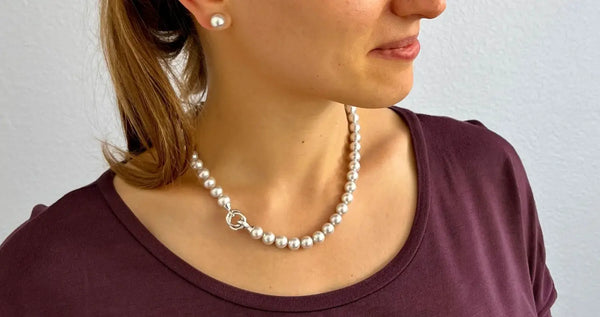
Ready to choose? Here’s a step-by-step guide to choosing a pearl you won’t regret buying.