


Pearls are the oldest gem in human history — the one that came first, before any other stone was polished or faceted or set in gold. You didn’t need tools to find them. You just had to open a shell.
What the myths tell us
Every culture that lived near water has a pearl myth. The Arabs said they were tears of the gods that fell into the sea. The Greeks said they were Aphrodite’s tears. In Hindu tradition, Krishna gave his bride Rukmini a pearl on their wedding day. The Old Testament describes the garments of Adam and Eve as radiant as pearls.
Myths don’t attach themselves to ordinary things. The fact that pearls appear independently across cultures that had no contact with each other tells you something real: the pearl does something to people. It always has.
What they meant to the powerful
For most of human history, pearls were the ultimate status object — not diamonds, not rubies. Pearls. Rome passed laws reserving them for patricians. The British crown briefly restricted them to royalty and nobility. Spanish fleets sailed into the Gulf of Mexico looking for them. The French went to Polynesia. The British went to Australia. The pursuit was relentless enough that it nearly wiped out entire oyster populations.
That same pressure eventually forced the innovation that changed everything: pearl cultivation. The technology that saved the oyster also democratized the gem. Pearls went from the exclusive property of emperors to something a person of ordinary means could own and wear. That shift happened within living memory — within the last hundred years.
What makes them different from every other gem
A diamond is geology. A pearl is biology — and that distinction matters more than it might seem.
It forms inside a living creature, layer by layer, over years — not as a defense against an irritant, which is the old school of thought. What actually happens is simpler and stranger: epithelial cells from the mantle, displaced by grafting, injury, or parasite intrusion, keep doing exactly what they were designed to do. They grow nacre, just in a new location. The pearl is not a reaction but a continuation — a normal part of the mollusc’s life cycle, happening somewhere unexpected.
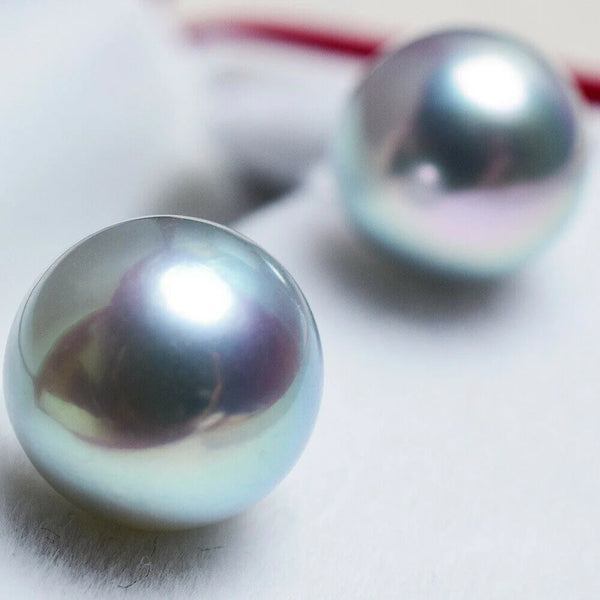
No two pearls are identical. The luster, the overtone, the shape — all of it is the result of that specific animal, in that specific water, over that specific period of time. You cannot replicate it. You can only find it.
That is what makes pearls worth understanding — the fact that something this beautiful came from something this alive.
Want to go deeper? Here’s how a pearl actually forms — and why the grain of sand story doesn’t hold up. And here’s what separates a remarkable pearl from an ordinary one.