



If you’ve been looking at pearls — especially darker ones — you’ve probably wondered: are these natural color, or are they dyed?
It’s a reasonable question. And the answer is not always obvious just by looking.
The short answer: dyed pearls are real pearls whose color has been enhanced. This is a common and accepted practice — as long as it is clearly disclosed.
Are All Pearl Colors Natural?
Some pearls are sold with no color treatment at all. Others are treated after harvesting — often through dyeing. This is part of the pearl industry norm. And on its own, it is not a problem.
Why Disclosure Matters
According to international pearl trade standards, any treatment — including dyeing — should be clearly disclosed. A dyed pearl is not a problem. An undisclosed one is.
The issue is not that a pearl has been treated — that happens, and it is accepted practice. The issue is whether it is disclosed to you clearly, or quietly left out.
Dyed Akoya Pearls
Naturally black Akoya pearls do not exist. When you see black Akoya pearls, they have been treated to achieve that color. The dye penetrates the nacre and creates a very dark, often uniform appearance. See the full breakdown of black pearl types here.
Black isn’t the only color Akoya is dyed. Pearls with a naturally bluish or grayish tone are sometimes dyed cobalt blue to intensify the color. Cream-colored Akoyas are sometimes treated to give them a warmer golden hue. The results can be beautiful — and with a reputable seller, this will always be disclosed.
That doesn’t automatically make any of this undesirable — but it does mean it should be described accurately. I see this misrepresented regularly. And it’s avoidable.
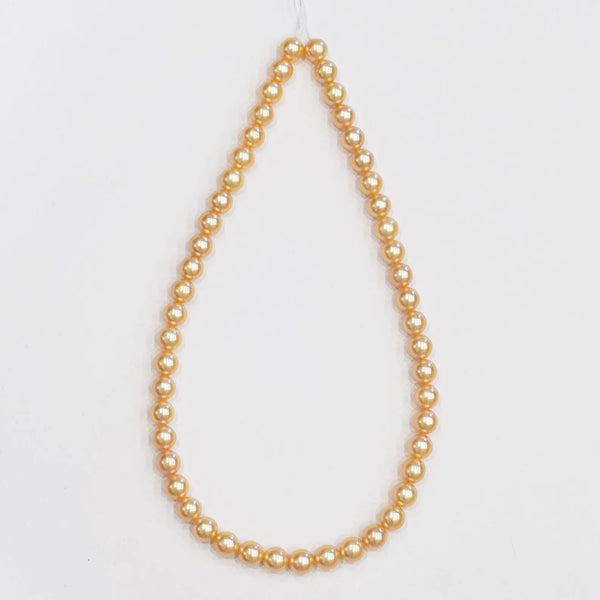
Color treated golden Akoya
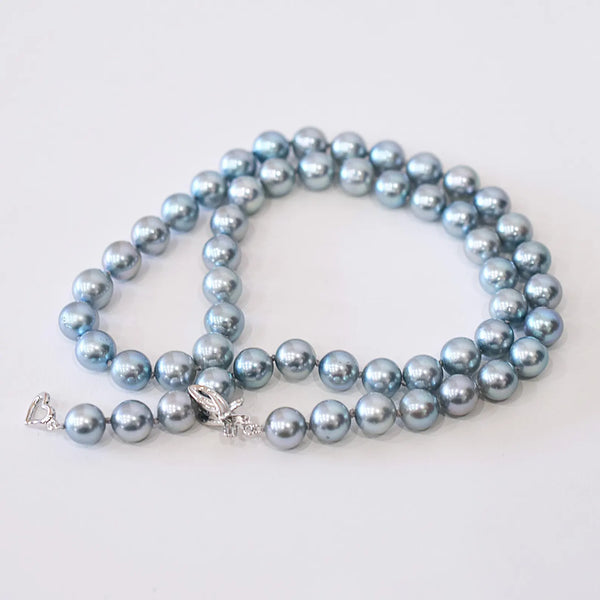
Color treated cobalt Akoya
Does Pearl Dyeing Affect Its Value?
This is where confusion happens most often. The question is not whether the pearl is real — it is whether the color is natural.
Some pearl types simply do not produce certain colors naturally. Chinese freshwater pearls, for example, are not naturally black — but they are regularly dyed to achieve that look. And it’s not always about dark colors: a very light lavender can occur naturally in freshwater pearls, but a deep, saturated grape or amethyst hue is a different matter entirely.
The pearl is real. The type may be correctly stated. But the color you see — or the intensity of that color — is not what that pearl type produces naturally, and that is the part that should be disclosed.
A pearl sold with enhanced color at the price of a naturally colored one is not a fair transaction.
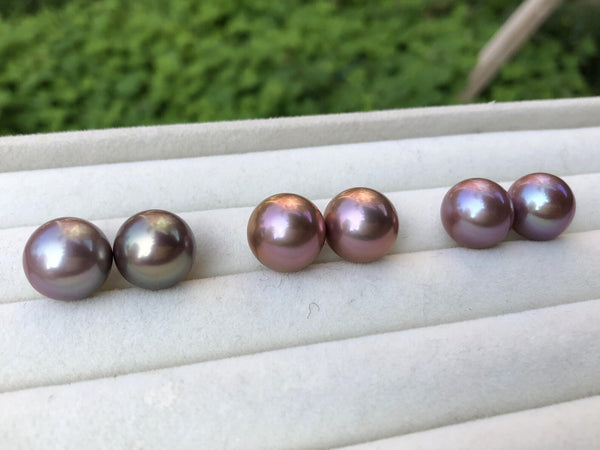
Color treated Chinese Freshwater pearls
Are Dyed Pearls a Bad Choice?
A treated pearl is not necessarily a lower-quality pearl. It simply means the color you see is not the one the pearl was born with — not necessarily an artificial or wrong color for its type, but often an enhancement: a pale, understated hue made more vivid and vibrant.
There are dyed pearls that are attractive, well-matched, and suitable for jewelry. They can also offer colors not commonly found in nature.
I very rarely sell dyed pearls, and if I do, I fully disclose it — but I’m not here to tell you they’re wrong. If you know what you’re buying and the price reflects it, that’s a fair transaction.
When Does Pearl Dyeing Become a Problem?
Issues tend to arise when:
- treatment is not mentioned
- wording is unclear
- natural and treated pearls are presented too similarly
- pricing does not reflect the difference
At that point, it becomes difficult to understand what you are actually looking at.
This isn’t hypothetical. Treatment is sometimes described as natural color, and the listing looks completely convincing — professional photography, confident language, the right terminology. That’s what makes it easy to miss. If the color looks too perfect to be real, ask a second opinion from someone who handles pearls regularly and has no stake in the sale.
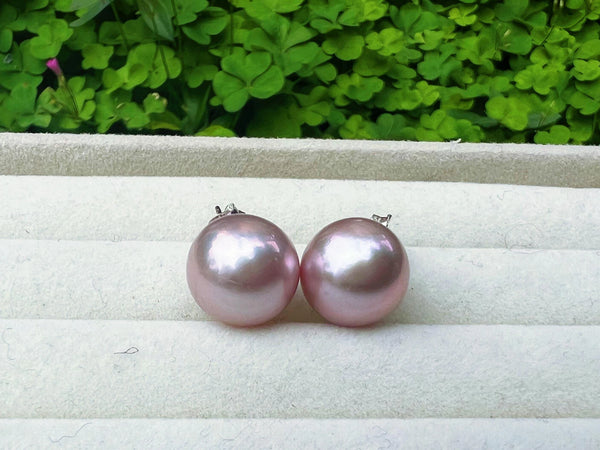
Natural color Chinese Freshwater pearls
What Should You Ask Instead?
Instead of focusing only on whether a pearl is dyed, it’s more useful to ask:
- What type of pearl is this?
- Is the color natural or treated?
- Has anything been done to enhance it?
- Is that clearly explained?
You don’t need technical language. You just need clear answers.
If you want to understand how color fits into the broader picture of pearl value, here’s how all the value factors work together.
The Bottom Line
Dyed pearls are part of the pearl world. They are not inherently good or bad. What matters is that you understand what you are looking at. Once that’s clear, the choice is yours to make.
If you want to avoid the most common traps when buying pearls, here’s how to avoid mistakes when buying pearls.
All pearls in this store are sold with full color disclosure. The rare dyed pieces I carry are listed here: dyed pearls in stock.
Or browse by natural color type:
Quick Answers
Are dyed pearls real?
Yes — the pearl itself is real, only the color is altered.
Do dyed pearls last?
Yes, but the color can fade over time depending on treatment and care.
Are dyed pearls less valuable?
Usually, yes — especially compared to naturally colored pearls of similar type.
Should I avoid dyed pearls?
Not necessarily — as long as the treatment is clearly disclosed and the price reflects it.
Comments
Dear Pam, thank you so much for this comment!
The dead link in that article has been fixed and now you can read about black pearls, following the link in this article.
With pearl love, Marina
Hello. When I clicked on the ‘full breakdown of black pearl types’ I didn’t find any relevant information. Has the site been changed?
Thank you very much for your friendly and informative website.
With Kind Regards, Pam