



People don’t always ask this directly — but it’s almost always there: “If I spend this much… will it hold value?” The answer depends on what you’re buying and why.
Most pearls are not financial investments — and they’re not meant to be.
But high-quality pearls can retain their value over time — especially as availability changes.
Are Pearls Worth Buying?
- Pearls are usually not a financial investment
- But well-chosen pearls can hold value in a different way
If you’re expecting resale profit, pearls are not the right category. If you’re looking for something rare, wearable, and increasingly difficult to replace — the value becomes much clearer.
If you’re trying to understand what actually drives value, here’s why pearls can vary so much in price.
What Do People Mean by “Investment”?
Two questions usually sit behind it:
- Will this increase in value over time?
- Could I resell it later for the same or a higher price?
Pearls don’t fit neatly into that category. They are not designed to behave like traditional financial assets.
Are Pearls a Good Financial Investment?
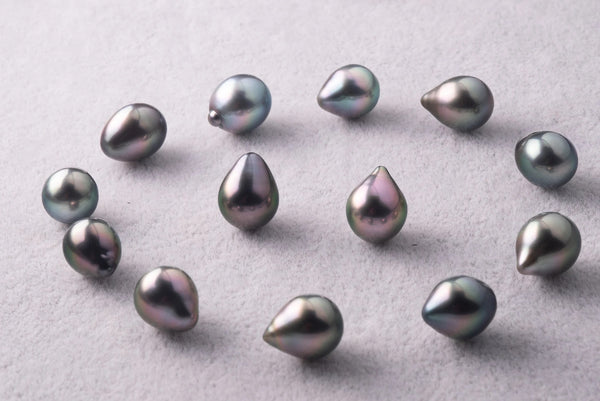
Most pearls — especially cultured pearls — are not purchased as financial investments. They are produced in larger quantities, and while quality varies, they are not rare in the same way as fine natural pearls. They are not typically bought with resale in mind, and that is a straightforward fact about the category.
Is the Pearl Market Changing?
Pearl farming today is not the same as it was 20 or 30 years ago. Environmental conditions are changing — water temperature, salinity, and overall ocean health all play a role.
In some regions, there have been significant challenges — for example, declines in Akoya oyster populations in Japan. As a result, producing high-quality pearls can be more difficult than it once was. That affects availability. And over time, it affects pricing.
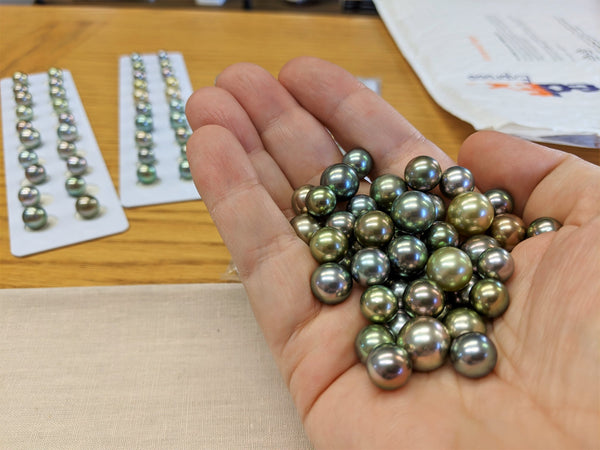
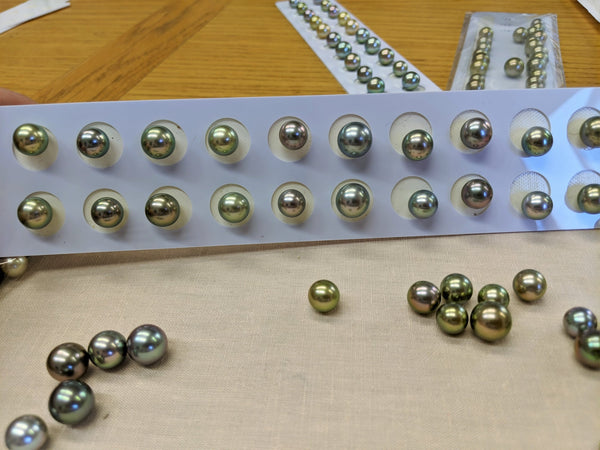
I source pearls regularly, and I can tell you directly: the prices have gone up. What I paid for certain quality two or three years ago is not what I pay today. The supply has thinned, the quality has shifted, and that’s reflected in what things cost. That’s not marketing — it’s just what I see.
Higher-quality pearls are becoming harder to source — and that affects long-term value.
What Does This Mean for Pearl Value Over Time?
This doesn’t turn pearls into a traditional investment. But it does mean something important: a well-chosen pearl today may not be easy to replace later at the same price.
In that sense, value is not only about resale — it’s also about availability. A pearl that is difficult to replace later holds its value in a different way.
Are Natural Pearls an Investment?
Natural pearls are much rarer. They form without human intervention, and historically they were the only type of pearl available. Because of that, they can appear at major auctions and may hold or increase in value over time — especially if they are:
- well documented
- of high quality
- part of a significant piece
These are the pearls that come closest to behaving like traditional investment assets. But even here, value depends on many factors, including market demand.
Does Quality Affect Long-Term Value?
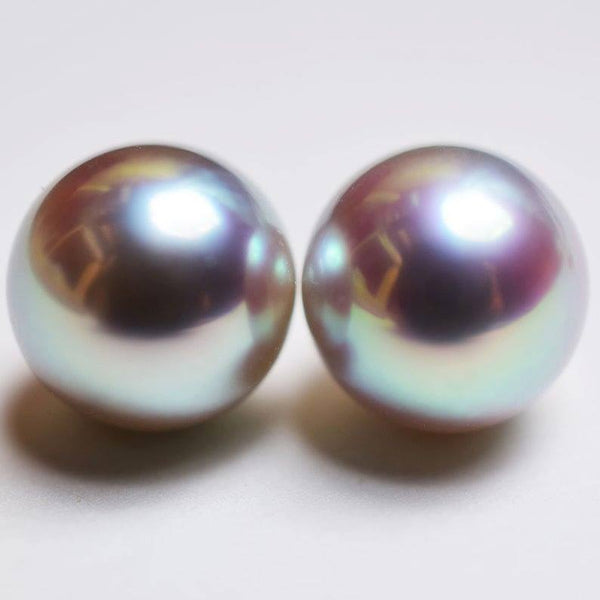
Whether or not something is considered an “investment,” quality plays a major role in how well it holds value. Pearls with strong luster, good surface, balanced proportions, and careful matching are more likely to remain desirable over time.
Lower-quality pieces tend to be more replaceable. And grading labels alone won’t tell you which is which — here’s why “AAA” doesn’t mean what most people think.
For a full breakdown of what actually separates a good pearl from a mediocre one, here’s how the key value factors work.
How Do Pearls Hold Their Value in Real Life?
If you walk into a pawn shop, most jewelry will be undervalued. That’s just how that market works. Well-chosen pearls tend to hold their ground differently — they are not something people rush to sell, but something people choose to keep, pass on, or include as part of their estate.
Owning something that remains wearable, desirable, and difficult to replace — and that holds its ground as availability tightens — is its own form of value.
The Bottom Line
Most pearls are not financial investments in the traditional sense. But well-chosen pearls can retain their value over time — not only in how they look, but also in how easy or difficult they are to replace. When the quality is there and the piece is right for you, that question answers itself.
If you want to make that choice with confidence, here’s how to choose a pearl you won’t regret buying.
Quick Answers
Are pearls a good investment?
Usually no — not in the traditional financial sense.
Do pearls increase in value?
Not consistently, but high-quality pearls may become harder to replace over time.
Which pearls hold value best?
High-quality pearls with strong luster, good surface, and desirable size.
Are natural pearls an investment?
Sometimes — especially rare, well-documented pieces sold at auction.