


White Akoya pearls come in three primary overtones: pink, silver, and cream.
The difference between them is subtle — and it matters more than most people expect. The right overtone will make the pearls disappear into your skin in the best possible way. The wrong one will make them look slightly off, without you being able to say why.
Once you've settled on size, overtone is usually the next decision. If you haven't chosen a size yet, here's how pearl sizes actually compare.
Pink Overtone (Rosé)
The most sought-after overtone — and for good reason. Pink works with most skin tones, particularly fair skin with yellow or neutral undertones. Blondes and light to medium brunettes will find it flattering almost universally.
The one exception: pale skin with a strong pink undertone. In that case, the overtone can amplify redness in the face and décolletage rather than complement it.
Metal pairing: yellow or rose gold to enhance warmth; white gold to keep the look cool and restrained.
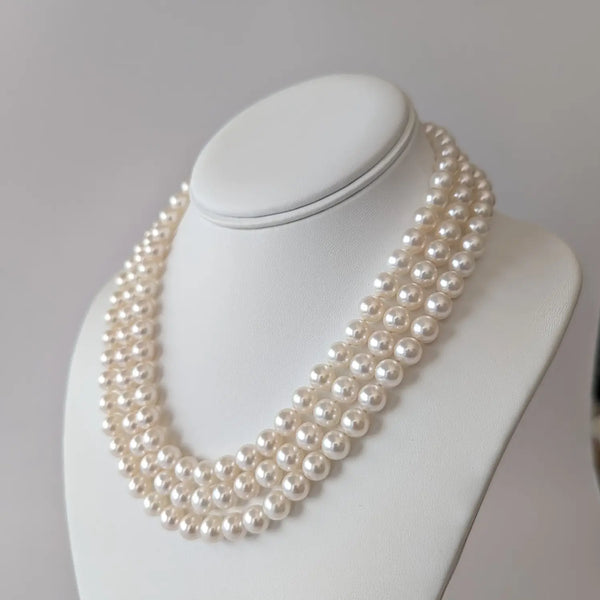
Silver Overtone
A pale, cool gleam over white — occasionally with secondary hues of blue or green visible beneath the surface. The second most popular overtone, and the sharpest-looking of the three.
Best for: dark skin, olive and Mediterranean skin tones, those who tan easily, dark brunettes and black-haired women — even with very fair skin. The contrast between dark hair and bright white pearls makes the pearls read larger and more vivid.
Metal pairing: white gold or silver to reinforce the cool tone; yellow gold if you want to introduce warmth against the cool shimmer.
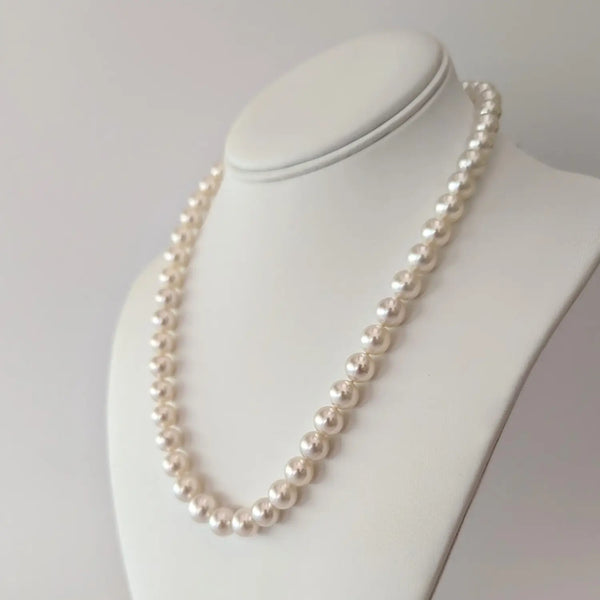
Cream Overtone
The most common overtone — a warm ivory or yellowish cast over white, ranging from faint to saturated. In the finest examples, flashes of pink or pale purple appear under certain light.
Best for: pink or red skin undertones, redheads, chestnut hair, white or silver-gray hair. Cream overtone against red hair is one of the more striking combinations in pearl jewelry.
Metal pairing: yellow gold to enhance warmth; white gold works better for gray hair than for warm or red tones.
How to Test Without a Mirror
Place the strand on the inner side of your wrist. The undertone there is the same as in the décolletage — and it's where the interaction between pearl and skin is most visible. Trust what you see there.
One More Thing Worth Knowing
White Akoya pearls are not the only option if you're drawn to unusual color. Blue Akoya pearls — a natural color, not dyed — are among the rarest in the category. Here's what makes them different.
And if you're still working through the broader decision, this guide covers how to choose a pearl you won't regret buying.