



I don’t know of anything more beautiful than blue Akoya.
It’s the sky and clouds dissolving into each other — the color of calmness, hope, and early spring. I love it dearly.
Today I want to tell you how and why blue Akoya pearls form — that light blue, silvery, or gray tone. The explanation is now better understood, though not always widely known.
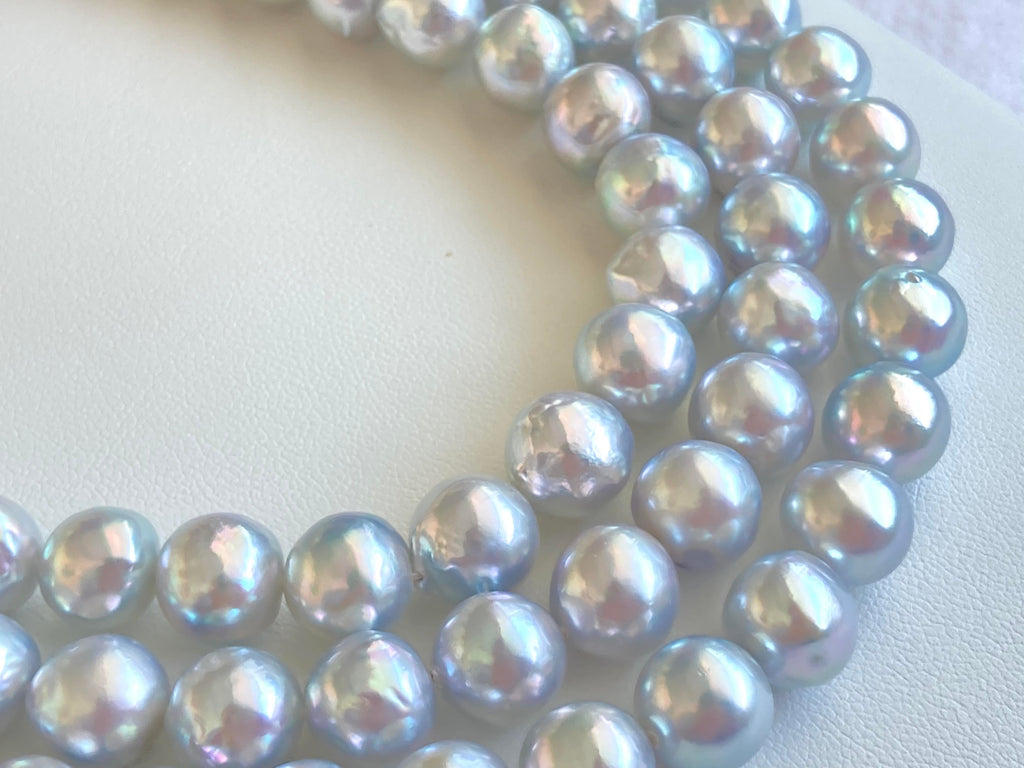
What Gives Akoya Pearls Their Blue Color?
Is it processing? The water composition? Something the oyster filters as it feeds? Marine biologists and pearl specialists studied this question for years.
According to the Pearl Association of America, blue Akoya pearls are linked to variations during nucleus insertion.
The grafting process is the most delicate step in culturing pearls. The oyster Pinctada fucata martensii — the “mother” of Akoya pearls — is the smallest pearl-bearing mollusk used in cultivation today.
The technician must make a precision incision in the gonad, insert a perfectly round nucleus, and place a tiny 1mm piece of donor mantle tissue right on top of the nucleus. That small piece of donor tissue triggers pearl sac formation, and normally the color of the donor-tissue nacre influences the final tone of a pearl.
For a deeper look at how this process works, here’s how a pearl is actually formed.
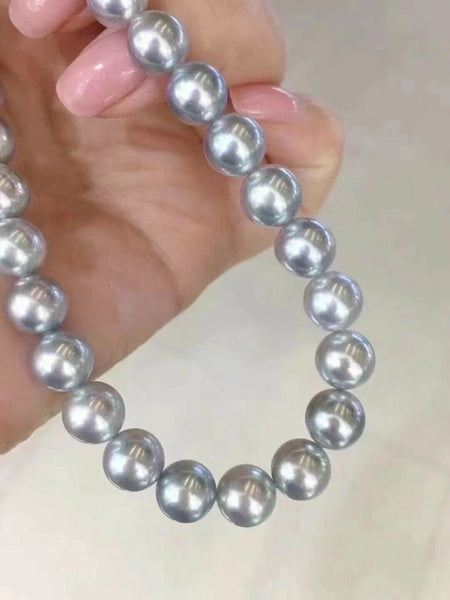
But in Blue Akoya, Something Else Happens
In the case of blue Akoya, the donor tissue’s color hardly matters. Here’s why: when a nucleus is inserted incorrectly — too deep or not delicately enough — the oyster releases organic compounds as part of its stress response. This secretion has a far greater influence on the developing color than the donor’s epithelial cells, which usually define tone in other pearls.
In short, when the graft causes trauma, the oyster produces a dark brown or black organic coating around the nucleus. Viewed through thousands of translucent layers of aragonite nacre, that dark layer appears — blue.
So blue Akoya pearls are, quite literally, pearls formed as part of the oyster’s healing response.
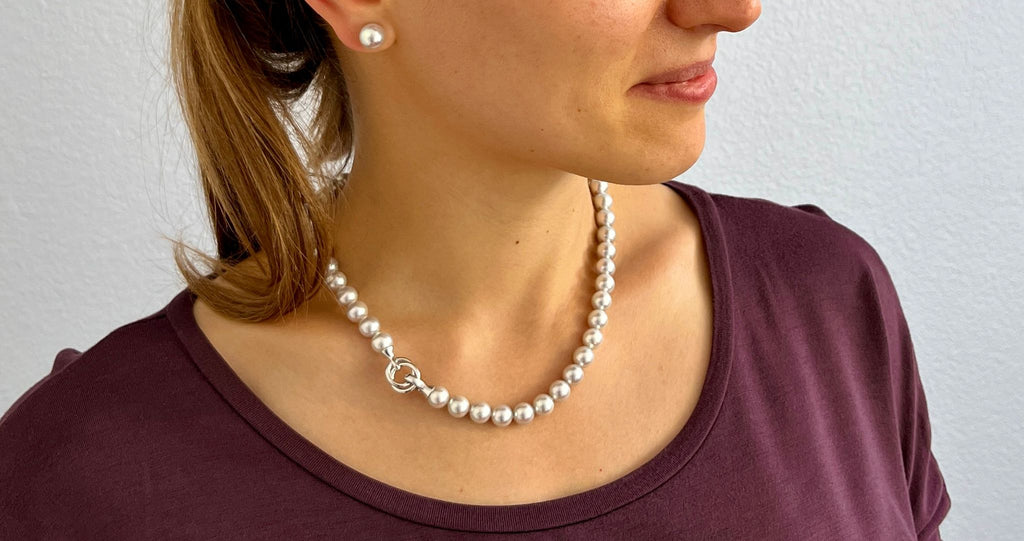
A Rare Color, Once Rejected
Blue Akoya pearls have existed since the beginnings of Akoya pearl cultivation in the 1920s. Traditionally, these tones were discarded at harvest as “imperfections” — because the ultimate goal of Akoya farming was the perfect white pearl.
Today, things have changed. Jewelers and collectors have come to treasure Akoya’s natural colors — blue, gold, pistachio, silver — alongside the classic white and cream.
Still, true blue or dark-blue Akoya pearls remain rare. Pearl farmers do not aim for blue; it appears only by chance. And finding a truly round blue Akoya pearl is still a matter of luck.
If you want to understand how overtone and color work across white Akoya pearls, here’s how to choose the right overtone.
Why Are Blue Akoya Pearls So Hard to Find Today?
The color is slowly disappearing.
The reason behind the blue color is fairly well understood — yet the mystery remains why some pearls are bright blue, while others shift toward silvery or silver-blue. Many researchers suspect water temperature plays a role, and it raises the question of how environmental changes may affect future production.
Twenty-five years ago, blue Akoya pearls were unmistakably vivid. Today they’re still beautiful — but the truly deep-blue ones have become increasingly rare. The same trend appears with blue South Sea pearls — there are fewer each year.
Many Akoya farms now operate at the edge of the species’ temperature range; the oysters simply die more easily. It’s possible that the authentic blue Akoya tone could disappear one day — like clouds fading from a bright sky.
A Final Note
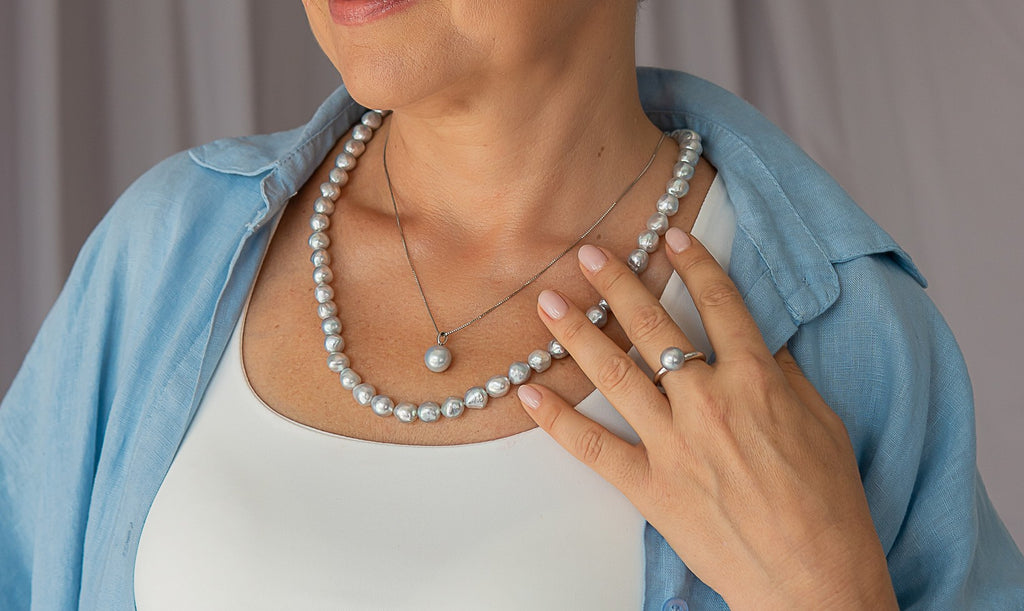
If you want size and luster and don’t obsess over absolute roundness or surface perfection — look for baroque blue Akoya. Blue pearls against any shade of skin are among the most graceful things in jewelry.
Frequently Asked Questions
Are blue Akoya pearls natural or treated?
Both exist. Some blue Akoya pearls develop their color naturally during formation, while others are dyed — often sold as “cobalt blue” Akoya. The distinction matters, as natural and treated pearls differ in appearance and value. For more on this, here’s what you should know about dyed pearls.
Why are blue Akoya pearls so rare?
They are not intentionally produced. Blue tones appear only under specific conditions during cultivation, which makes strong natural blue colors uncommon.
Do blue Akoya pearls fade over time?
Their color is generally stable, but prolonged exposure to direct sunlight can affect appearance over time. As with all pearls, proper care helps preserve both color and luster.