



When buying pearls, the question is often not whether to buy — but where to start.
Price ranges vary widely, and without context, it’s not always clear what makes sense at each level.
If I were starting from scratch, this is how I would approach it today.
What Matters More Than Budget
You are not buying “a pearl.” You are choosing:
- a type of pearl
- a level of quality
- a level of rarity
The budget simply defines how far into that spectrum you can go. If you want to understand what actually separates a good pearl from a mediocre one, here’s how the value factors stack up.
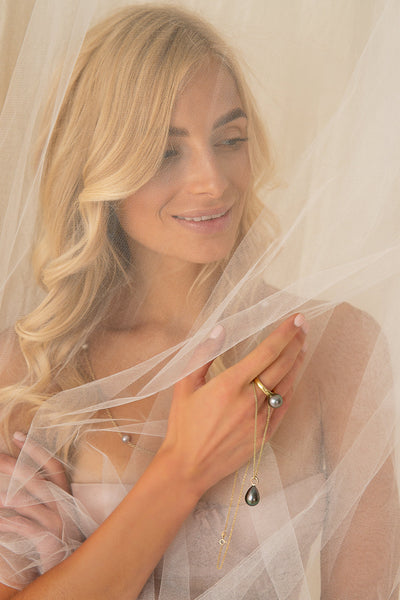
At $500 — Start With Quality, Not Size
The mistake at this level is trying to stretch too far — chasing size or perfection at the expense of luster and wearability.
Choose a piece where:
- luster is strong and lively
- the surface is relatively clean
- the design is simple and wearable
I would choose something I can wear often — not something trying to look more expensive than it is.
This is where freshwater pearls often make the most sense — or a single Tahitian pearl pendant, or a pair of stud earrings.
Japanese Akoya Pearl Solitaire Necklace — a recent example at this level.
At $1,000 — Focus on Presence
This is where pearls begin to feel more substantial.
You can start to prioritize:
- larger size
- stronger luster
- more distinct character
I would still avoid paying for branding.
Instead, look for a piece where the pearl itself carries the value.
This is where the difference becomes visible — between something that is simply nice, and something that has been carefully chosen.
12mm Tahitian Pearl Dangle Hook Earrings — a recent example at this level.
At $3,000 — This Is Where Selection Becomes Visible
At this level, you are buying selection — and it shows.
This shows up in:
- better matching
- stronger luster across the entire piece
- more selective sourcing
You also begin to access:
- rarer pearl types
- more distinctive colors
- pieces that are less common overall
If you want to understand why prices at this level are what they are, here’s why pearls are so expensive — and when they shouldn’t be.
7.5–8.0mm Golden Akoya Pearl and Australian Opal Necklace — a recent example at this level.
What to Avoid at Any Budget
The same temptation appears at every level:
Trying to maximize size, perfection, and brand — all at once.
The result is usually a piece that does none of those things particularly well.
A better approach is to decide what matters most at your price point — and choose accordingly.
A Simple Way to Decide
Instead of asking “what is the best pearl I can get for this price,” ask:
- What quality can I access at this level?
- What trade-offs am I making?
- Does this piece feel selected — or generic?
Those answers are far more reliable than price alone.
If you’re unsure about size, here’s how pearl sizes actually compare — including what a 1mm difference really means in practice.
If you want to choose with full clarity: how to choose a pearl you won’t regret buying.
And if you’re wondering whether pearls hold their value over time: are pearls an investment?