



Pearls can last a very long time — but like most natural materials, they do require some awareness. Here’s what actually matters.
Pearls Are Not Hard Gemstones
Pearls are organic, formed by a living mollusc, and made of layers of nacre. That’s what gives them their depth and glow — but it also means they sit lower on the hardness scale than diamonds or sapphires. They shouldn’t be treated like something indestructible. At the same time, “soft” does not mean “fragile.”
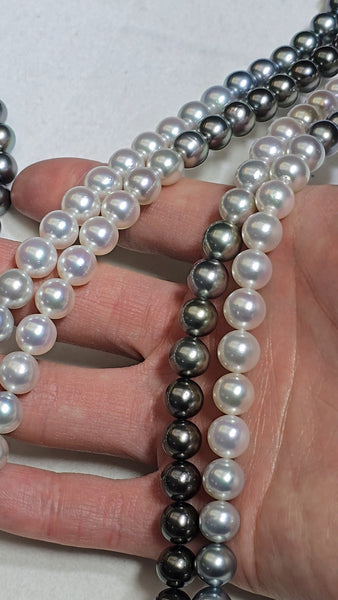
Pearls Are Meant to Be Worn
There’s a common idea that pearls should be saved for special occasions only. In reality, they do well with regular wear. Natural skin contact can even be beneficial — the oils from your skin help keep nacre from drying out.
I recently spoke with a woman at a local art fair who owns a Tahitian pearl necklace but is too afraid to wear it, worried she might damage it. I hear this more often than you might expect. It’s a shame, because pearls are meant to be worn and enjoyed — not kept away out of concern. What matters more is how they are handled, not how often they are worn.
What Can Affect Pearls Over Time
Pearls don’t suddenly deteriorate — but they can be affected gradually by their environment. The main things to be aware of:
- Chemicals — perfume, hairspray, cosmetics
- Prolonged dryness
- Abrasion from harder materials
- Improper storage
These don’t immediately damage a pearl, but over time they can affect the surface and luster.
Do Pearls “Wear Out”?
Not in the way people imagine. A well-made pearl with good nacre does not simply peel. However, over many decades — especially with poor storage or exposure to harsh conditions — the surface can slowly change. Nacre quality, storage, and how they’re treated between wearings all play a role.
I was once shown an Akoya necklace with visible peeling and crackling of the nacre. It had been stored for years in an environment that was far too dry. That kind of damage doesn’t happen overnight — it develops over time. And it’s avoidable.
Strands and Maintenance
A pearl necklace is more than the pearls. The thread it’s strung on matters too — and it doesn’t last forever. Over time, thread can stretch, weaken, or accumulate dirt between the knots, especially with regular wear. That’s normal, and it’s not a sign that something is wrong with the pearls themselves.
Restringing periodically is simply part of owning a pearl strand — think of it as routine maintenance. Here’s a detailed look at how pearl necklaces are strung and what to know before you restring.
What to Expect Long-Term
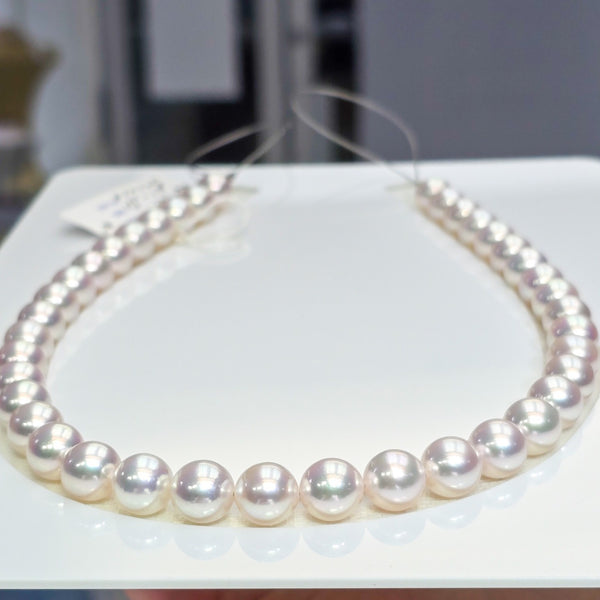
With reasonable care, pearls can last for decades. Many older pearl pieces still look beautiful today — not because they were never worn, but because they were worn and cared for appropriately. Pearls are meant to last generations — but they need to be treated as the organic material they are.
The Bottom Line
Wear them. Store them properly. Avoid unnecessary exposure to chemicals. And if you wear them through the summer, these 9 seasonal tips are worth a read. Pearls are more durable than most people expect — with good nacre and reasonable care, they can be enjoyed and passed to the next generation.