


What are Keshi?
Keshi are non-nucleated pearls formed unintentionally as a by-product during the pearl cultivation process. Their formation occurs when an oyster rejects and expels the implanted nucleus before the pearl process is complete, or when a few cells separate from the implanted piece of epithelial tissue, forming separate pearl sacs. These random pearl sacs eventually produce non-nucleated pearls — keshi, a Japanese term meaning “poppy seed.”
Keshi can only be of marine origin, formed in saltwater mollusks. Freshwater pearls without a nucleus are not keshi, though Chinese vendors — and many others — use the term freely. By CIBJO standards, these are non-nucleated freshwater pearls, not keshi. The distinction matters when you’re buying.
Keshi are usually small, and because there was no nucleus to define the final form, their shapes vary considerably. Tahitian and South Sea keshi can be quite large if left to grow for several years. They are exceptionally lustrous, beautiful, and genuinely rare.
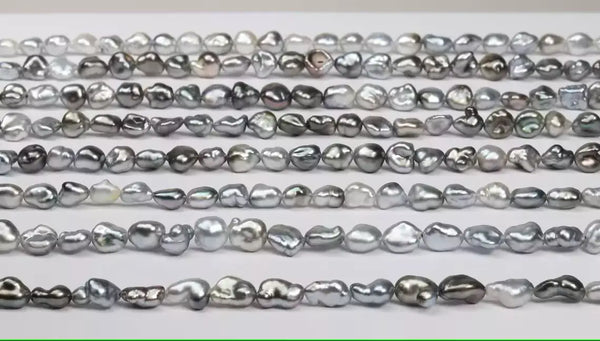
Tahitian Keshi
The beauty of Keshi pearls
Keshi pearls come in various colors and typically display very high luster and strong orient — the rainbow-colored effect visible on a soap bubble. This is a direct result of their composition: 100% nacre, with no nucleus. Most keshi have a luster rarely found in cultured pearls of even the highest quality.
It is worth noting that keshi are not considered natural (wild) pearls. Even being solid nacre does not qualify them as natural. They are a by-product of the cultivation process — not a natural phenomenon — and are classified accordingly.
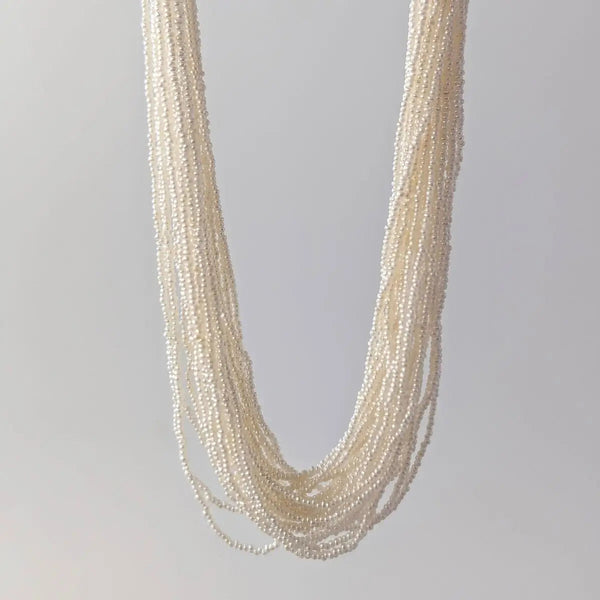
1.0–1.5mm Akoya Keshi Necklace
The rarity of Keshi
Keshi — especially Tahitian and South Sea keshi — were once fairly common on the market and an excellent price-to-quality purchase. Today they are much harder to find. The reason: most marine pearl farms now scan charged mollusks a few months after implantation to detect nucleus rejection. When a non-nucleated oyster is found, it is re-implanted before a keshi can form. This practice has significantly reduced supply. Akoya keshi in particular are exceptionally rare, as Japanese farms operate at a consistently high-tech level with tight process control.
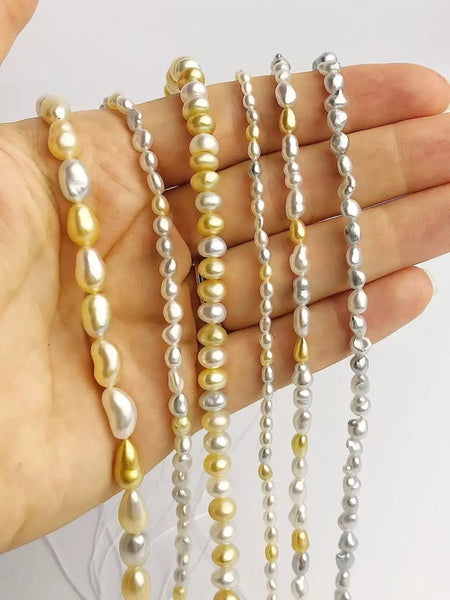
South Sea Keshi
Keshi remain available and sought after by collectors and enthusiasts for their luster and rarity. They appear in multi-strand necklaces, pearl chains, and high-end jewelry. When you encounter them, they are worth serious attention.

Golden and White South Sea keshi from my collection. The paw is here to say "approved" 😄
For more on how pearls form and what makes nacre so special, here’s how a pearl is actually formed.