


Tahitian pearls are the most varied pearl type in existence. No other pearl produces the same range of color, overtone, and depth — and no other pearl is as frequently misunderstood.
This guide covers what actually matters when evaluating them: color, overtone, luster, and how those factors interact with price.
What Makes Tahitian Pearls Different
Tahitian pearls are often called “black pearls” — but that label is misleading. Their color spectrum runs from pale silver-gray to deep black, with overtones of green, blue, purple, pink, gold, and combinations of all of these.
They are the only pearl type that produces naturally dark colors, and that distinction alone sets them apart from every other pearl type.
Of my entire collection, Tahitian pearls dominate — not by accident. The range of what’s possible within a single pearl type is unlike anything else.
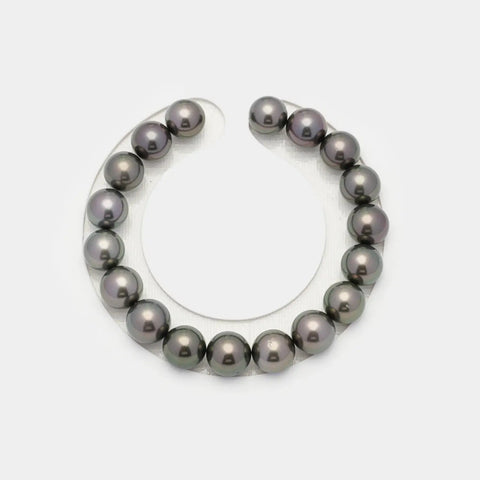
Green Cherry Tahitian Pearls
The Color Vocabulary
The pearl industry uses commercial names for Tahitian overtone colors. These are the ones you’ll encounter:
- Cherry / Eggplant: Purple-black
- Champagne: Yellowish-gray
- Pistachio: Greenish-gray
- Lavender: Bluish-black
- Tahitian Gold: Goldish-black
- Pigeon Gray: Lilac-gray
- Silver: Gray
- Moon Gray: Pale-gray
- Gray Orient: Iridescent surface effect (aurora)
Peacock is in a category of its own — see below.
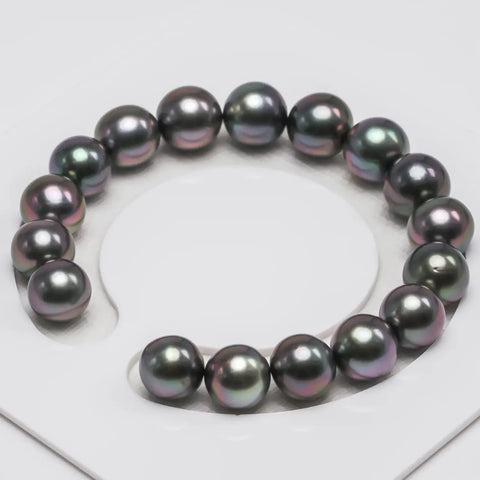
Purple Cherry Tahitian Pearls
Why Color Affects Price
Professional grading focuses on luster first, then roundness, size, and surface. Color is secondary in a technical evaluation.
The market, however, does not follow the same logic.
When all other factors are equal, certain colors command significantly higher prices — because demand for them is higher and supply is lower. The most sought-after: peacock, cherry/eggplant, lavender, and pistachio.
This creates a gap between professional grading and market pricing that confuses many buyers. A gray pearl with exceptional luster may be technically superior to a peacock pearl with average luster — but the peacock will sell for more.
To understand how luster and other factors interact with price more broadly, here’s how pearl value factors work.
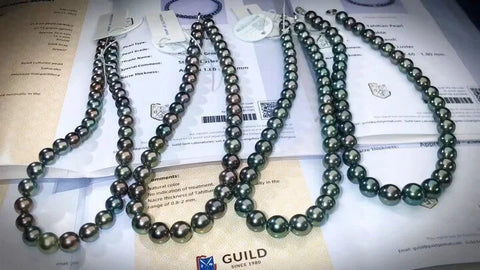
Dark Tahitian pearls with blue and green overtones
Gray Tahitian Pearls
The most common — and therefore the least expensive. Gray pearls often have lower luster, which is part of why they’re more available. However, gray pearls with strong luster are genuinely beautiful and priced higher within this color range, as they are rarer.
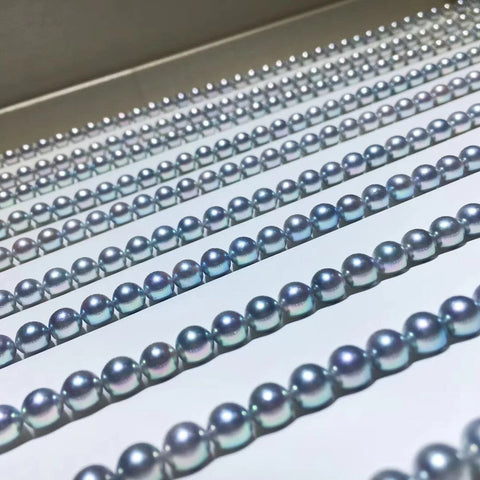
Gray Tahitian pearl with a silver overtone
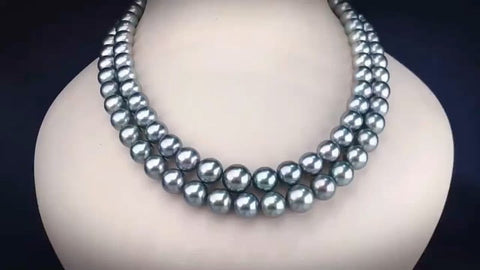
Gray Tahitian pearl with a blue overtone
Dark Tahitian Pearls
Priced 3–5 times higher than gray pearls of the same size and quality. Dark pearls grow in younger oysters, which produce better nacre and stronger luster — which is why they tend to look more alive.
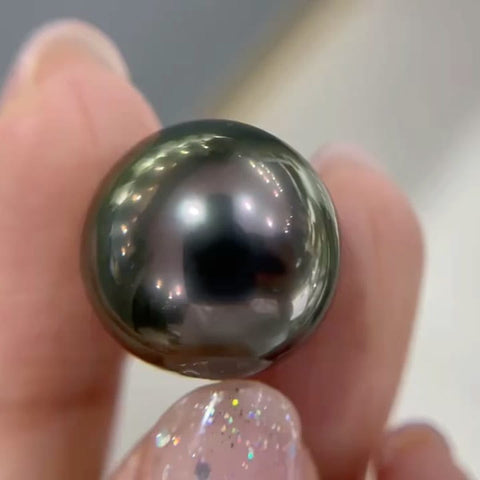
Black pearl with a faint green overtone and bright luster
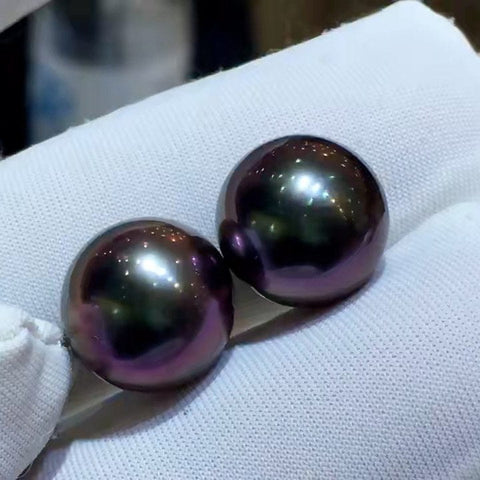
Black Tahitian pearl with a purple overtone (eggplant)
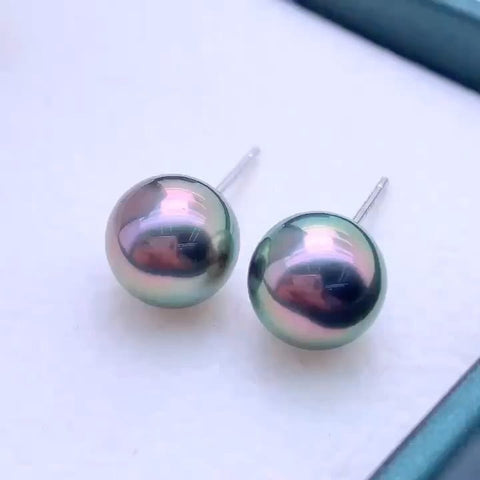
Dark Tahitian pearl with a pink overtone (light cherry)
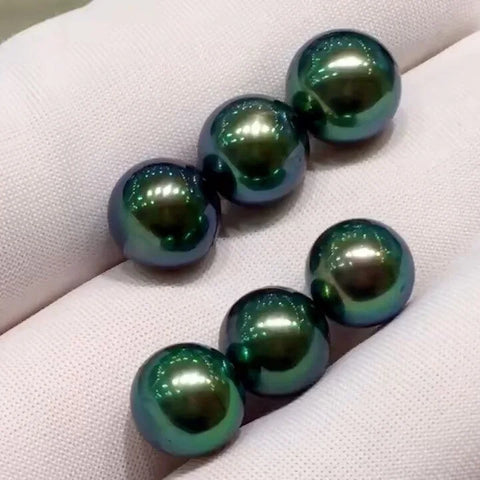
Black pearl with a green overtone (emerald)
Tahitian Peacock Pearls
The rarest and most expensive Tahitian pearl. Peacock describes a specific combination: greenish-black with simultaneous overtones of pink, blue, green, and gold — like the surface of a peacock feather. The darker and more complex the peacock color, the more valuable the pearl.
Priced 3–15 times higher than dark pearls of the same quality. Mostly offered by a small number of high-end suppliers. Peacock is genuinely rare — the term describes a specific optical phenomenon, not a marketing category.
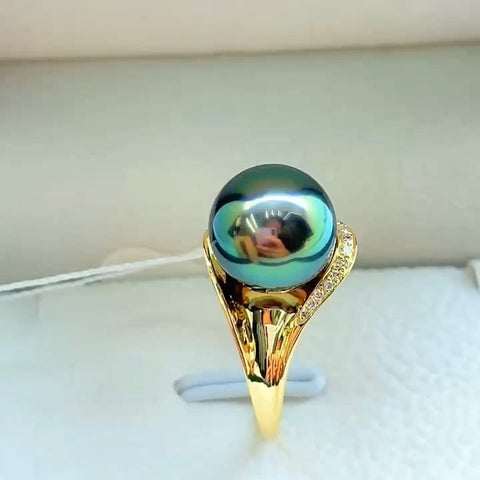
Black Tahitian pearl with a bright green peacock overtone
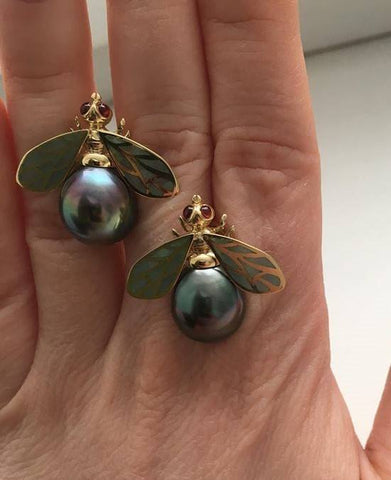
Dark Peacock Tahitian Pearls
What to Remember
Tahitian pearls are a spectrum — in color, in luster, and in price. The rarity and beauty you pay for are real. But so is the confusion around grading labels and color names.
The clearest signal of quality is always luster. Color determines desirability. Both together determine what a Tahitian pearl is actually worth.
If you’re also looking at black pearls from other sources and want to understand what’s what, here’s a quick reference guide to black pearls.
And if you want to understand how Tahitian pearl pricing compares to other types, here’s how saltwater pearl pricing works.
Browse Tahitian pearl necklaces · Pendants · Earrings · Bracelets