


Most people choose necklace length by instinct — or by what’s available. Both approaches work — until the piece arrives and something feels off.
There is a more reliable method: balance points. Two measurements derived from your own proportions that tell you exactly where a necklace should sit to flatter your face and neck — not someone else’s.
What Balance Points Are
Your balance points are proportional reference marks based on the natural lines and dimensions of your face. They tell you where shorter necklaces should end (upper balance point) and where longer pendants or layered pieces should fall (lower balance point).
Once you know them, necklace selection becomes straightforward.
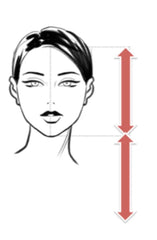
How to Find Your Lower Balance Point
Take a flexible measuring tape. Place one end at the center of your hairline and measure straight down to the tip of your chin. Note that length — don’t adjust it.
Now let the tape drop naturally from your chin down your chest. Where it lands is your lower balance point. This is where longer pendants and layered necklaces should ideally fall.
How to Find Your Upper Balance Point
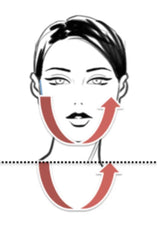
Measure around the widest points of your face — typically near the cheekbones or temples — passing under your chin and ending at the widest point on the opposite side.
Without adjusting the tape length, move it to where your neck meets your shoulders and let it drape naturally. Where it rests is your upper balance point — the ideal landing spot for shorter necklaces and chokers.
How to Apply Your Balance Points
Shorter chains and chokers should end at your upper balance point — this draws attention upward toward your face.
Pendants and longer necklaces should fall at your lower balance point — this anchors the look and balances your overall proportions.
When layering, your shortest piece ends at the upper balance point and your longest at the lower. That’s the structure that makes layered necklaces look intentional rather than accidental.
If you want to go further with layering, here’s a full guide to layering pearl necklaces.
A Few Additional Considerations
- Neckline: V-necks work well with pendants. Boatnecks and turtlenecks generally suit longer necklaces.
- Proportion check: After selecting a piece, stand in front of a mirror and assess how it aligns with your balance points — not just how it looks in isolation.
- Layering: Use your two balance points as anchors. Everything in between is a matter of taste.
If you’re building a jewelry wardrobe rather than choosing a single piece, here’s how to approach a capsule jewelry wardrobe with pearls.
And if you’re thinking about everyday wear rather than special occasions, this covers how to wear pearls in everyday life.